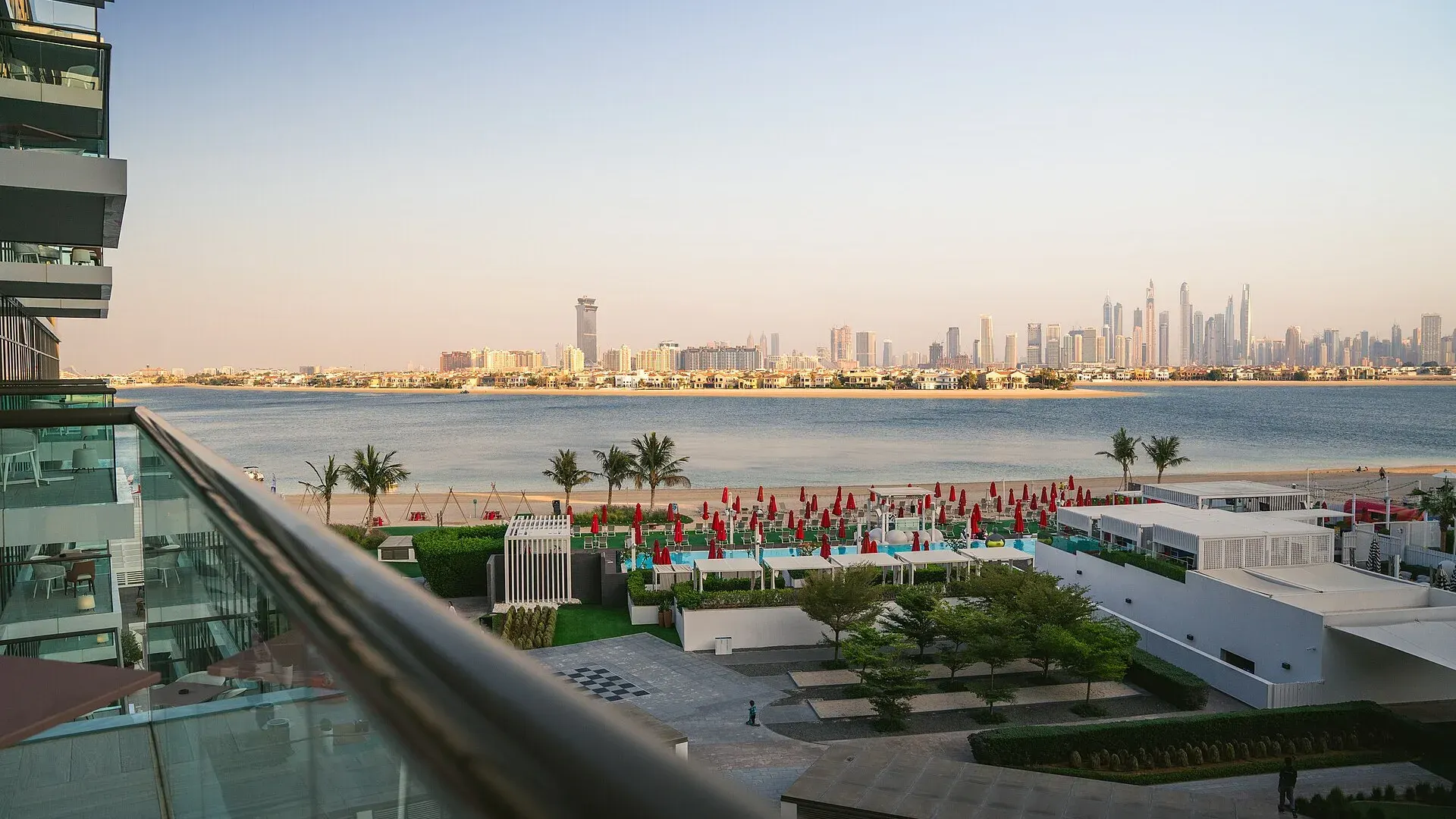
Dubai’s real estate market operates under the fundamental macroeconomic forces of supply and demand. Supply encompasses the active stock of completed properties available for lease or acquisition, combined with the pipeline of off-plan units scheduled for physical handover. Demand reflects the collective purchasing power, demographic growth, and investment intent of domestic residents, international high-net-worth individuals (HNWIs), and institutional capital.
However, viewing Dubai through a generalized citywide lens leads to distorted underwriting. The emirate is an assemblage of distinct, non-fungible micro-markets. An inland suburban district absorbing thousands of newly completed townhouses experiences completely different supply-and-demand dynamics than an exclusive waterfront island with zero unallocated land plots.
Below is an institutional analysis of how supply and demand forces interact in Dubai real estate, how to measure inventory depth, and how to identify defensive investment opportunities.
1. Deconstructing Property Supply in Dubai
In real estate underwriting, supply is dynamic and multi-layered:
| 1. Active Resale Stock | Ready properties currently listed on the secondary mkt |
|---|---|
| 2. Active Rental Stock | Available vacant units competing for immediate tenants |
| 3. Under-Construction | Projects actively being built with RERA escrow accounts |
| 4. Future Master Pipeline | Announced master-plan phases awaiting site mobilization |
The Delivery Slippage Reality
A critical distinction in Dubai real estate analysis is separating announced developer launches from actual physical handovers:
- Developers routinely include contractual grace periods (typically 6 to 12 months) in standard Sales and Purchase Agreements (SPAs).
- Historically, approximately 20% to 35% of units scheduled for delivery in any given calendar year slip into subsequent reporting periods due to contractor supply-chain bottlenecks or technical commissioning.
Always verify physical construction progress via the official Dubai REST mobile app rather than accepting developer marketing schedules at face value.
2. The Multi-Tiered Drivers of Dubai Housing Demand
Demand in Dubai is powered by five distinct buyer and occupier cohorts:
- Owner-Occupier End Users: Resident families and long-term expatriates purchasing for primary residence, driven by community infrastructure, international schools, and lifestyle amenities.
- Cross-Border Wealth Preservers: Ultra-high-net-worth individuals (UHNWIs) and global family offices allocating capital to hedge currency debasement, seeking political neutrality, zero municipal property taxes, and US dollar-pegged monetary stability (AED).
- Institutional Yield Investors: Private funds and wealth managers targeting recurring, inflation-protected net rental yields across prime ready commercial and residential corridors.
- Residency and Golden Visa Buyers: Investors allocating a minimum of AED 2,000,000 to secure a renewable 10-year UAE Golden Residency for themselves and their immediate families.
- Corporate and Executive Inflows: Multinational corporations expanding regional headquarters in DIFC, Downtown, and Business Bay, driving sustained demand for premium executive suites.
3. How Supply and Demand Balance Governs Asset Pricing
The interaction between inventory availability and buyer absorption establishes market equilibrium:
$$\text{Absorption Velocity} = \frac{\text{Total Units Sold in Trailing 12 Months}}{\text{Total Active Available Inventory}}$$
- Seller’s Market (Absorption > 20% per month): Buyer demand outpaces immediate completed supply. Marketing time compresses, negotiation margins vanish, and capital values appreciate.
- Buyer’s Market (Absorption < 12% per month): Competing handover supply exceeds immediate tenant or buyer absorption. Sellers and landlords offer concessions, such as flexible payment terms or rent-free periods.
- Balanced Equilibrium (Absorption 12% to 20%): Price movements track underlying economic growth, inflation, and tenant wage growth.
4. Micro-Market Segmentation: Why Citywide Averages Mislead
A generalized headline claiming “Dubai has an oversupply” or “Dubai has an undersupply” is fundamentally inaccurate. Supply and demand must be evaluated by specific asset category:
| Real Estate Segment | Supply Profile | Demand Depth | Cyclical Resilience |
|---|---|---|---|
| Super-Prime Waterfront (Palm Jumeirah, Jumeira Bay, Bulgari Lighthouse) | Extremely constrained; zero unallocated shoreline | Global UHNWI wealth migration, international buyers | Decoupled & Highly Resilient |
| Urban Financial Core (Downtown Dubai, DIFC) | Finite land parcels; high development barriers | Corporate executives, professional services | Strong & Liquid |
| Suburban Family Communities (Dubai Hills Estate, Arabian Ranches) | Controlled master releases by Tier-1 developers | Long-term families, owner-occupiers | High End-User Demand |
| Outer Secondary Clusters (Expanding inland master communities) | Substantial multi-phase construction pipelines | Price-sensitive renters, speculative investors | Subject to Handover Waves |
5. How to Measure Supply-Side Risk Before Acquisition
Before committing capital to an investment property, execute this supply-side audit:
- Sub-Community Pipeline Audit: How many comparable units are scheduled for completion in the target neighborhood over your intended 36- to 60-month holding horizon?
- Developer Inventory Saturation: Does the master developer still hold unsold inventory in adjacent phases that they are releasing with competitive post-handover payment plans?
- Layout Standardization vs. Differentiation: Will your property compete against hundreds of identical 1-bedroom units, or does it boast distinctive features (e.g., corner plot, open sea view, private plunge pool)?
- Historical Registered Transactions: Benchmark real transaction volume via the official Dubai Land Department Real Estate Data portal to assess how many units the local secondary market actually absorbs annually.
6. How Supply Directly Impacts Rental Yields and Resale Liquidity
Supply dynamics dictate both ongoing income and eventual exit execution:
Rental Yield Compression
When a newly completed tower hands over 800 apartments simultaneously, an influx of investor-owners list their units on the rental market concurrently. To attract tenants quickly, asking rents soften, compressing initial gross yields.
Investors must underwrite a conservative 5% to 8% vacancy allowance (2–4 weeks annual downtime) to absorb tenant turnover cycles.
Resale Exit Liquidity
A property’s resale liquidity describes how rapidly it can be liquidated at fair market value. When competing inventory is abundant, buyers have immense negotiating leverage.
Conversely, scarce assets in fully built-out enclaves maintain superior exit liquidity because buyers have virtually zero alternatives.
Frequently Asked Questions
What happens when residential property supply increases in Dubai?
In sub-markets experiencing substantial handover waves, tenants and buyers gain negotiating leverage. Landlords may offer incentives or adjust rents, while sellers face longer marketing periods. In prime, land-constrained areas, supply increases have minimal downward impact.
How does population growth influence Dubai property prices?
Population growth increases underlying housing demand, but its impact on pricing depends on household income levels, mortgage affordability, and the specific property types being added to the market.
Where can I check verified Dubai property supply and transaction records?
Review historical completed sales, active registrations, and project milestone data directly on the official Dubai Land Department Real Estate Data portal (dubailand.gov.ae/en/open-data/real-estate-data/).
Should investors avoid communities with multiple new off-plan launches?
Not necessarily. Large master-planned launches by Tier-1 developers bring world-class infrastructure, schools, and retail amenities that elevate long-term community value. However, investors must underwrite conservative short-term yields during peak construction and handover phases.
Is scarcity enough to guarantee high capital appreciation?
No. Scarcity protects against competing supply, but an asset must also possess functional layout appeal, manageable Mollak service charges, and genuine buyer demand at its price point to appreciate sustainably.
Private Inquiries & Advisory
For private consultations and property advisory: +971 586776996 (WhatsApp & Call)








