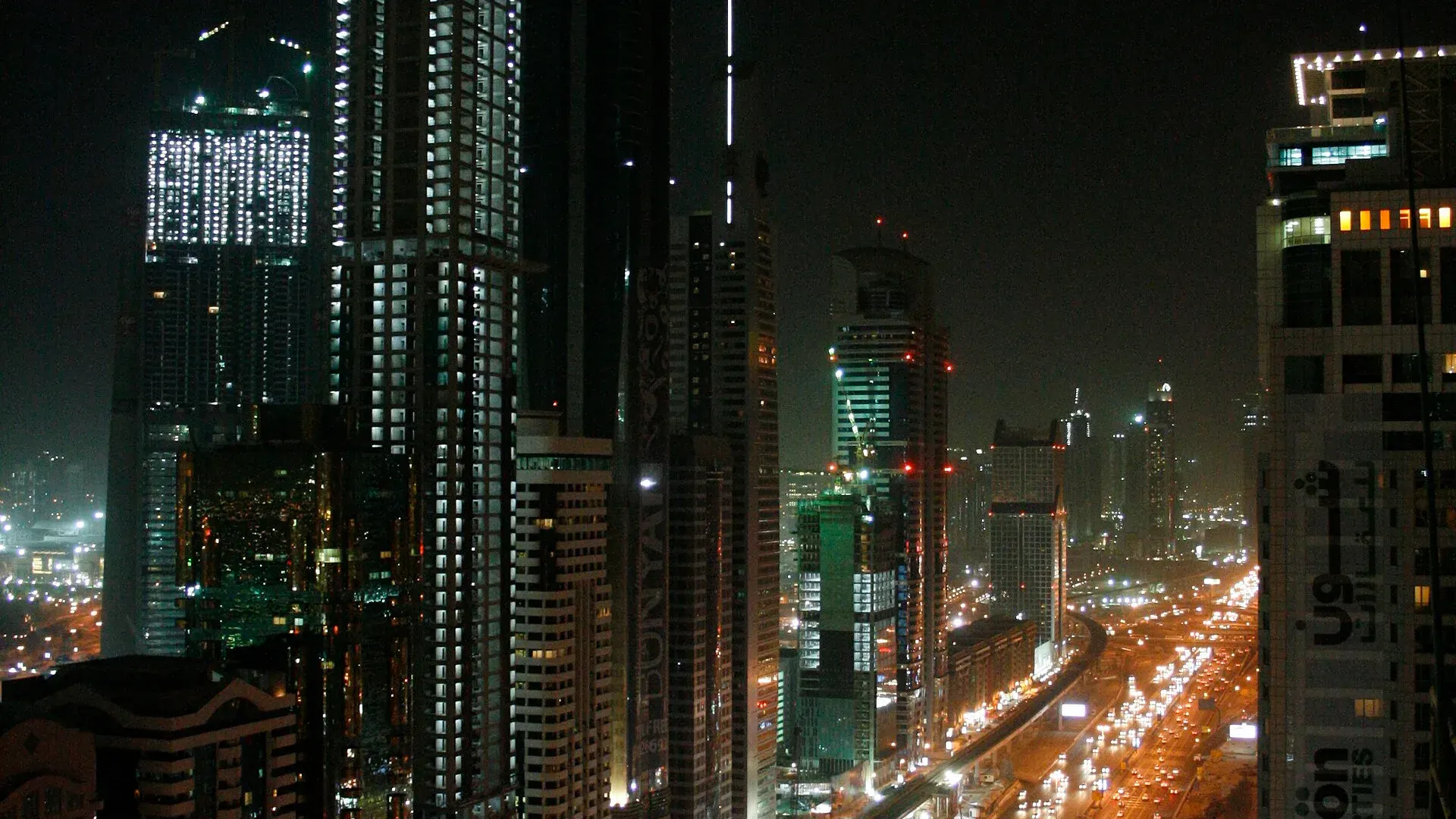
International investors deploy capital into Dubai real estate for diverse, strategic reasons: capital preservation, portfolio diversification outside domestic markets, attractive net rental yields, family lifestyle relocation, and access to self-sponsored long-term residency.
There is no singular profile for an international buyer. A private equity executive acquiring a buy-to-let apartment in Business Bay operates with very different criteria from an international family office securing a beachfront villa on Palm Jumeirah or a foreign entrepreneur investing to secure a UAE Golden Visa.
Understanding the structural, economic, and regulatory catalysts driving global capital to Dubai helps prospective buyers evaluate whether the emirate aligns with their broader wealth management goals.
1. Access to an Institutional-Scale, Liquid Real Estate Market
Dubai’s property sector has transitioned from an emerging regional hub into a primary global wealth repository alongside London, New York, Zurich, and Singapore.
Official government metrics demonstrate this institutional scale:
- The Dubai Public Debt Management Office reported that total real estate transactions surpassed AED 917 billion in 2025, with real estate investments exceeding AED 680 billion across approximately 258,600 transactions.
- Transaction activity continued to expand in Q1 2026, reaching AED 252 billion recorded by the Dubai Land Department.
This massive volume provides deep transactional liquidity, transparent price discovery, and institutional confidence for international capital allocators.
2. 100% Freehold Ownership in Designated Master Communities
Since the passage of Law No. 7 of 2006, foreign nationals of any nationality—regardless of their UAE residency status—can acquire absolute freehold title deeds across Dubai’s designated investment zones.
Freehold ownership provides unencumbered, indefinite title rights registered digitally in the Dubai Land Department’s central registry. Owners possess the full legal entitlement to lease, mortgage, renovate, sell, or pass the property to heirs through formal succession. To explore foreign ownership rules, review our guide to buying property in Dubai as a foreigner and consult our curated overview of the best freehold areas in Dubai.
3. Currency Stability: The US Dollar Peg
For international investors navigating volatile emerging-market currencies or depreciating domestic foreign exchange reserves, Dubai real estate offers direct exposure to the UAE Dirham (AED), which has been officially pegged to the United States Dollar (USD) at a fixed rate of 3.6725 since 1997.
This dollar-pegged monetary stability ensures that:
- International revenues and capital gains are protected from currency depreciation.
- Rental cash flows can be converted seamlessly to USD and repatriated internationally without foreign exchange friction or exchange control barriers.
4. Tax Neutrality and Wealth Optimization
One of Dubai’s most compelling competitive advantages is its fiscal framework:
- 0% Personal Income Tax on rental revenue.
- 0% Capital Gains Tax upon property sale.
- 0% Recurring Property Tax (no annual municipal wealth or council levies beyond standard building service charges).
- 0% Estate / Inheritance Tax levied by the local government.
While investors must consult with tax counsel regarding their home-country reporting obligations, Dubai imposes no withholding or local taxation on real estate wealth compounding.
5. Long-Term Residency: The 10-Year UAE Golden Visa
For many international investors, acquiring real estate is a strategic pathway to unlocking long-term self-sponsored residency in the United Arab Emirates.
Under federal regulations administered by the Federal Authority for Identity, Citizenship, Customs and Port Security (ICP), purchasing completed or qualifying off-plan property valued at AED 2,000,000 or more enables the buyer to secure a 10-year renewable Golden Visa.
Key residency benefits include:
- No UAE Presence Mandate: Holders can remain outside the UAE indefinitely without invalidating their visa (exempt from the standard 6-month absence cancellation rule).
- Family Inclusion: Unrestricted sponsorship for a spouse, children of any age, and parents.
- Domestic Autonomy: Right to live, work, open premier bank accounts, and establish businesses without third-party local sponsors.
Explore the full scope of residency privileges in our detailed guide on Golden Visa benefits for property investors.
6. Global Lifestyle, Safety, and Strategic Connectivity
Beyond financial returns, Dubai’s exceptional civic infrastructure makes it a premier destination for global families:
- Safety & Security: Consistently ranked among the safest cities globally, with near-zero violent crime and robust digital policing.
- Aviation Hub: Located at the geographical crossroads of Europe, Asia, and Africa, with direct non-stop flights connecting Dubai International Airport (DXB) and Al Maktoum International (DWC) to over 250 global business capitals.
- World-Class Healthcare and Education: Home to international hospital networks (King’s College, Mediclinic) and top-tier British, American, and International Baccalaureate curricula.
7. Trophy Assets and Branded Residences
Dubai has established itself as the global capital for ultra-prime branded residences, partnering with luxury hospitality and design brands such as Bulgari, Armani, Dorchester Collection, Four Seasons, and Ritz-Carlton.
For ultra-high-net-worth individuals (UHNWIs), these properties represent scarce lifestyle assets combining private yacht berths, dedicated concierge services, bespoke interior architecture, and private beach frontage. While brand premiums must be evaluated against comparable sales data, trophy real estate provides enduring wealth preservation characteristics.
What International Investors Must Verify Before Acquiring Property
A disciplined acquisition strategy requires completing rigorous due diligence prior to executing binding contracts:
- Title Deed & Ownership Verification: Ensure the seller has clean, unencumbered title on the DLD Rest app before signing Form F.
- Escrow Security for Off-Plan: Verify that project payments are routed strictly through the project’s registered DLD escrow account.
- Service Charges and Operating Ratios: Review the historical service charge per square foot on the DLD Mollak portal.
- Exit Liquidity Analysis: Evaluate whether the micro-market possesses deep local and international resale demand across economic cycles.
Frequently Asked Questions
Can an overseas buyer purchase Dubai property without visiting the UAE?
Yes. International buyers can purchase real estate remotely by appointing a registered real estate broker or conveyancer via a digitally notarized Power of Attorney (POA) attested through the Dubai Courts.
Do foreign property buyers pay higher transaction fees than UAE citizens?
No. Dubai Land Department enforces an identical, uniform 4% transfer fee across all buyers regardless of nationality, residency status, or corporate ownership.
Can international investors secure mortgages from UAE banks?
Yes. Licensed UAE commercial banks offer non-resident mortgages to foreign property buyers, typically requiring a 40% to 50% down payment, subject to international income verification.
Is Dubai freehold property inherited automatically by foreign heirs?
Foreign property owners can register a non-Muslim will with the Dubai International Financial Centre (DIFC) Courts or Dubai Courts, ensuring their real estate assets pass according to their personal estate plans rather than local default inheritance rules.
Private Inquiries & Advisory
For private consultations and property advisory: +971 586776996 (WhatsApp & Call)








