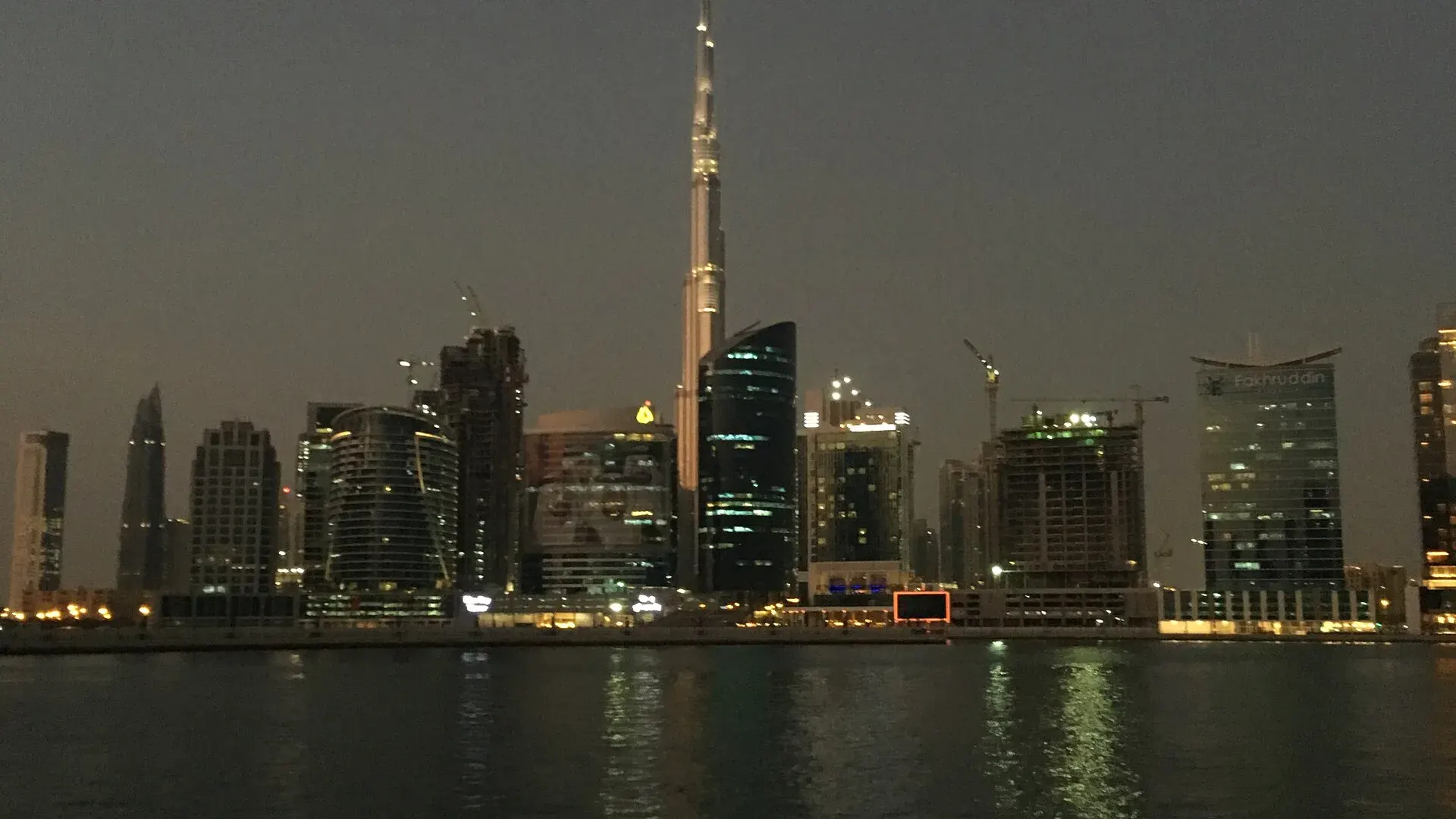
Selecting the optimal property in Dubai requires far more than reviewing glossy marketing brochures, virtual 3D walkthroughs, or headline price-per-square-foot comparisons. Two residential units offering identical bedroom configurations and marble finishes can deliver drastically divergent lifestyle outcomes and investment returns depending upon their master community, geographic positioning, master developer maintenance, arterial road access, and recurring service charges.
For international buyers, institutional investors, and family offices, evaluating Dubai neighborhoods demands a standardized, empirical evaluation matrix. A family acquiring a primary residence will prioritize school-run transit times, gated pedestrian safety, and garden privacy. An investor seeking cash-flow returns focuses on acquisition basis, verified rental transaction evidence, Mollak service charges, and secondary exit liquidity. A sovereign wealth or UHNW buyer seeking a trophy asset prioritizes architectural scarcity, permanent water frontage, and multi-generational capital preservation.
This guide provides an institutional methodology for comparing Dubai property locations before deploying capital.
1. Define the Purpose of Your Purchase
Before benchmarking micro-locations, define the core investment mandate:
| Buyer Category | Primary Mandate | Key Evaluation Metrics |
|---|---|---|
| Owner-Occupier / Family | Liveability & Convenience | School-run commute, parks, acoustic privacy, layout flow |
| Buy-to-Let Investor | Net Cash-on-Cash Return & Capital Growth | Achieved rental yields, Mollak fees, vacancy rates, liquidity |
| UHNW Trophy Asset Buyer | Generational Wealth & Prestige Preservation | Water/golf frontage, scarcity, plot size, bespoke architecture |
- Owner-Occupiers: Prioritize daily practicalities: morning commute times, nursery and school enrollment proximity, proximity to healthcare (e.g., King’s College Hospital, Mediclinic), and private garden depth.
- Rental Investors: Never rely on unverified online listing asking rents. Base underwriting on verified registered rental contracts registered on Ejari and DLD transaction databases.
- Trophy Buyers: Look for physical constraints on supply—such as limited beachfront fronds or private island perimeter plots—that insulate the asset from suburban supply dilution.
2. Compare Actual Transactions, Not Just Asking Prices
A common mistake among international buyers is confusing asking prices on listing portals with verified transacted market values. Asking prices reflect seller aspirations, while actual registered deeds establish real market value.
The Dubai Land Department (DLD) provides public access to its centralized transaction register via the Dubai Land Department Real Estate Data Portal.
When comparing two shortlisted communities:
- Match Typology Strictly: Compare standalone villas only against standalone villas of comparable plot size; never compare a villa with a townhouse or an apartment.
- Standardize Area Metrics: Distinguish between internal Built-Up Area (BUA), total saleable area (including terraces), and external plot size.
- Analyze Transaction Timeframes: Benchmark transfers registered over the preceding 6 to 12 months rather than multi-year historical averages that fail to reflect current market conditions.
- Isolate Outliers: Identify whether a registered sale included bespoke interior designer furnishings, private basement bowling alleys, or distress-sale terms that skew median statistics.
3. Assess Connectivity and Daily Accessibility
A community may appear centrally located on a map, yet suffer from severe arterial choke points during morning and evening rush hours:
| Location | Route Corridor | To Downtown / DIFC | To DXB Airport |
|---|---|---|---|
| Downtown / DIFC | Financial Centre | 0 - 5 minutes | 12 - 15 minutes |
| Dubai Marina / JBR | SZR (E11) | 20 - 25 minutes | 30 - 35 minutes |
| Palm Jumeirah | SZR (E11) | 22 - 28 minutes | 32 - 38 minutes |
| Dubai Hills Estate | Al Khail (E44) | 12 - 15 minutes | 18 - 22 minutes |
| MBR City (D1/Sobha) | Al Meydan / E66 | 8 - 12 minutes | 15 - 18 minutes |
| Tilal Al Ghaf | Hessa / E311 | 25 - 30 minutes | 30 - 35 minutes |
| Dubai Creek Harbour | Ras Al Khor (E44) | 10 - 14 minutes | 12 - 15 minutes |
- Peak-Hour Road Audits: Always test drive the route between the candidate property and your daily destinations during weekday rush hours (7:30 AM – 8:45 AM and 5:30 PM – 7:00 PM).
- Public Transit Access: For rental apartments, proximity to Dubai Metro Red Line stations (e.g., in Dubai Marina, JLT, or DIFC) significantly reduces tenant vacancy.
4. Compare Lifestyle and Community Infrastructure
Different master plans are engineered to cater to fundamentally distinct lifestyle patterns:
| Location Category | Flagship Communities | Key Lifestyle Driver | Maintenance & Upkeep |
|---|---|---|---|
| Beachfront & Island | Palm Jumeirah, JBR, Emaar Beachfront | Direct beach access, yacht slips, water sports | High: marine salinity, pool/seawall maintenance |
| Golf & Suburban | Emirates Hills, Dubai Hills, Arabian Ranches | Fairway vistas, mature trees, quiet streets | Moderate: landscaping, irrigation, clubhouse fee |
| Central Metropolitan | Downtown, DIFC, Business Bay | Walkable fine dining, cultural venues, offices | Low: building concierge, chiller-metered fees |
| Lagoon & Wellness | Tilal Al Ghaf, District One (MBR) | Swimmable crystal lagoon, sandy beaches, cycling | Moderate: master lagoon community service tariff |
5. Examine Upcoming Supply and Micro-Market Competition
Unchecked future residential supply within a sub-community directly impacts rent growth, tenant occupancy, and secondary resale liquidity:
- Verify Construction Status: Use the official DLD Real Estate Project Status Tracking Portal to inspect registered construction milestones, developer track records, and scheduled completion years for neighboring projects.
- Evaluate Inventory Absorption: In high-density districts (such as Business Bay or JVC), assess how many comparable one- and two-bedroom units are delivering in the same 12-month window.
- Barriers to Entry: Prime beachfront plots on Palm Jumeirah or luxury golf plots in Emirates Hills have near-zero supply elasticity, shielding existing owners against market dilution.
6. Calculate the Total Cost of Ownership
A complete financial comparison must integrate upfront statutory charges and recurring annual maintenance expenses:
| Cost Component | Statutory / Market Rate | Applied Basis |
|---|---|---|
| DLD Transfer Fee | 4% of Purchase Price | One-time upon transfer |
| DLD Admin & Innovation Fees | AED 580 | Fixed government fee |
| Licensed Trustee Registration Fee | AED 4,200 (+ 5% VAT) | One-time upon transfer |
| Real Estate Advisory Commission | 2% (+ 5% UAE VAT) | One-time upon signing |
| Developer Transfer NOC | AED 1,000 - 5,000 | Paid to developer |
| Community / Building Service Fee | AED 3 to AED 30+/sq. ft. | Annual recurring fee |
| Private Villa Landscaping & Pool | AED 25,000 - 75,000 | Annual recurring fee |
Always check historical service charges via the DLD Mollak Service Charge Index to verify whether building service fees are trending upward.
7. Compare Rental Demand and Net Operating Income
Never base investment decisions on gross yield alone. A property with an 8% gross yield and high service charges can generate less net cash flow than a 6% gross yield property with modest operating expenses:
- Gross Rental Yield: $$\text{Gross Yield} = \left(\frac{\text{Annual Rent}}{\text{Purchase Price}}\right) \times 100$$
- Net Operating Income (NOI) Yield: $$\text{Net Yield} = \left(\frac{\text{Annual Rent} - (\text{Service Charges} + \text{Maintenance} + \text{Management} + \text{Vacancy})}{\text{Total Capital Outlay (Purchase Price} + 4% \text{ DLD} + \text{Fees)}}\right) \times 100$$
8. Assess Resale Liquidity and Exit Horizons
Resale liquidity reflects how quickly an asset can be liquidated at fair market value:
- High Liquidity: Standard 1- and 2-bedroom apartments in Downtown Dubai and Dubai Marina typically trade within 30 to 60 days due to broad domestic and international buyer demand.
- Moderate Liquidity: Family villas in Dubai Hills Estate and Arabian Ranches (AED 5M to AED 15M) trade reliably within 60 to 90 days.
- Low Liquidity / High Ticket: Bespoke mansions and ultra-prime penthouses (AED 50M to AED 200M+) cater to a narrow global buyer pool, requiring targeted international marketing and hold horizons of 6 to 18 months upon exit.
9. Understand Ownership and Legal Jurisdiction
Ensure that your target community is a legally recognized 100% foreign freehold zone under Dubai Executive Regulation No. 3 of 2006. Furthermore, verify whether transactions fall under:
- Dubai Land Department (DLD): Onshore civil property framework governing the majority of Dubai communities (4% transfer fee).
- DIFC Registrar of Real Property: Independent common-law jurisdiction governing DIFC residential properties under DIFC Real Property Law (5% transfer fee).
10. Practical Weighted Location-Comparison Framework
Use this institutional scorecard to objectively evaluate competing Dubai communities:
| Evaluation Dimension | Suggested Weight | Candidate A | Candidate B |
|---|---|---|---|
| Valuation & DLD Price Comps | 20% | [Score 1-10] | [Score 1-10] |
| Arterial Road & Transit Access | 15% | [Score 1-10] | [Score 1-10] |
| Lifestyle, Schools & Amenities | 15% | [Score 1-10] | [Score 1-10] |
| Net Operating Income / Rental Depth | 15% | [Score 1-10] | [Score 1-10] |
| Mollak Service Charges & Upkeep Cost | 10% | [Score 1-10] | [Score 1-10] |
| Supply Pipeline & Competing Handovers | 10% | [Score 1-10] | [Score 1-10] |
| Secondary Resale Liquidity | 10% | [Score 1-10] | [Score 1-10] |
| Legal Freehold Title & Escrow Status | 5% | [Score 1-10] | [Score 1-10] |
| Total Weighted Score | 100% | Total / 10 | Total / 10 |
Frequently Asked Questions
What is the most important factor when comparing Dubai property locations?
The most important factor is aligning the location with your primary mandate: net cash flow, family liveability, or capital preservation. An investor should prioritize net rental yields and liquidity, while an owner-occupier must focus on daily commute times, school access, and neighborhood amenities.
How do I check official property transaction prices in Dubai?
Consult the official Dubai Land Department Real Estate Data portal, which provides transparent records of registered sales transfers, transaction values, and dates across all freehold communities.
Does a higher price per square foot mean a better location?
Not necessarily. Premium prices per square foot often reflect architectural prestige, waterfront frontage, or developer brand equity. However, an inflated price per square foot in a developing master plan with high incoming supply can restrict future capital appreciation.
What are the annual service charges for properties in Dubai?
Service charges vary widely: suburban family villas typically incur fees between AED 3 and AED 7 per sq. ft., whereas luxury high-rise towers in Downtown Dubai, DIFC, and Palm Jumeirah range from AED 18 to AED 35+ per sq. ft., regulated via the DLD Mollak index.
Are all residential areas in Dubai open to foreign buyers?
No. Foreign nationals and non-residents can acquire freehold ownership only in officially designated freehold zones under Dubai Executive Regulation No. 3 of 2006.
Suggested Internal Reading
- The Best Areas to Buy Property in Dubai
- Best Dubai Areas for Luxury Villas
- Best Dubai Areas for Branded Residences
- Dubai Freehold Communities for Foreign Buyers
- Best Dubai Communities for Property Investors
- Private Property Acquisition in Dubai: A Buyer’s Guide
Private Inquiries & Advisory
For private consultations and property advisory: +971 586776996 (WhatsApp & Call)








